
Why a lament, as opposed to a prayer or litany? This lament is intended as an action that acknowledges what has been broken in our relationship with our neighbor – the neighbor that we as the ELCA are called to love as we love ourselves. Specifically this lament is a way to recognize points of brokenness in the relationship between the ELCA and African Americans.
Read MoreIn 2014, during the lead-up to the commemoration of the Reformation’s 500th anniversary, a group of African descent Lutheran theologians gathered to explore and reflect on Martin Luther’s Small Catechism. While affirming the catechism’s gift in the life of the church, they recognized the importance of broadening its explanations of Christian faith to address the experience of Lutherans of African descent.
Read MoreWith partnership and support from the Mission Investment Fund of the ELCA, the ELCA Federal Credit Union (FCU) is now offering the second round of Payroll Protection Program (PPP) loans to congregations and ministries.
To review eligibility requirements and apply for a PPP loan, please visit the ELCA FCU’s website, www.elcafcu.org/PPP. The ELCA FCU will be accepting loan applications through March 31, 2021, or until funding is exhausted.
Read MoreAs part of ELCA World Hunger’s 40 Days of Giving, this post and accompanying video begin a series weekly reflections.
Ending hunger means seeing what unjust power tries to keep hidden. It means defining “we” in a way that threatens the principalities and powers — including our own privilege — that make everything about “I.”
Read MoreIn this post we’re highlighting Lutheran Advocacy Ministry Arizona’s update, focusing on: hunger and associated food security issues; community-based senior support; and fair and equitable distribution of COVID-19 vaccines.
For a full updates, see the original blog post on ELCA.org, or click an area you’re interested in: U.N. | Arizona | Colorado | Florida | New Mexico | Ohio | Pennsylvania | Texas |Washington | Wisconsin.
Read MoreBefore going into the story of my racial justice work, let us take a detour and consider how becoming Lutheran was part of my overall journey of integration as a former refugee.
I was born in Burundi and resettled in Fargo, N.D., in fall 1998 through Lutheran Social Services of North Dakota.
Read MoreLent is probably the church year’s midlife crisis. And, like real midlife crises, it doesn’t always come when we expect. This year Lent comes on the heels of Valentine’s Day, with the ashy cross marking our brows just days after the dust from candy hearts will cross our lips.
Read MorePhotographer Libby Oliver has a portrait series called “Soft Shells,” which explores people’s personalities through the clothes and accessories they wear. Libby asks subjects to collect every piece of clothing they own and then photographs them underneath their huge pile of clothes. In all the photographs the person’s identity is completely covered up.
Read MoreThis week, Presiding Bishop Elizabeth Eaton tells us of the steps she takes to find peace when she feels overwhelmed by stress and anxiety.
Read More“We are at a 1945 moment” — Those words from António Guterres, Secretary-General of the United Nations, came in a speech on January 10, 2021, marking the 75th anniversary of the first meeting of the U.N. General Assembly. Referencing the moment when the world, emerging from the horrors of World War II, took their first steps into a new era of global cooperation and unity.
Read MoreThis week, Bishop Eaton shares some of the rich contributions of Black Lutheran history.
Read MoreKen Wheeler wrote a reflection concerning Black Lutheran saints on “whose shoulders I stand.” He identified three pioneers of this church—Nelson Trout, Will Herzfeld and Rudolph Featherstone—who greatly inspired him and his vocation. Here is a closer look at the contributions of these saints.
Read MoreThe prophet Isaiah provides a beautiful column of words from which to build a thoughtful sermon, but truly on this Ash Wednesday the sermon will not be built by words, but by the world that is still trying to stop the hemorrhaging of our much loved friends and family. Truly we sit upon an ash-heap of tears and unrealized hopes in this pandemic.
Read MoreBlack History Month was the idea of African American historian Carter G. Woodson in the absence of a thorough picture of the contributions of African Americans to the larger American story.
The significance of this month ought not just be embraced by those of us who are African American. The history should be important to all of us. As an African American Lutheran pastor, I think of those Black Lutheran saints on whose shoulders I stand.
Read MoreBaltimore is home to Johns Hopkins University, renowned for its hospitals, clinics and research facilities. But despite their proximity, some of the city’s African American residents have struggled to fight the coronavirus pandemic, said Louis R. Tillman IV, pastor of St. Philip Evangelical Lutheran Church in East Baltimore.
Throughout the pandemic, the historic African-descent congregation has ensured that masks and other safety items reach anyone in need.
Read MoreIn the first decades of the 20th century, African Americans faced grinding poverty and harsh racial restrictions. Many African American leaders fought against these evils and worked to bring justice to their communities.
One such leader was Rosa Young of Alabama, whose drive and determination enabled her to spearhead the development of Black Lutheranism in the South.
Read More“We’re good at talking about this, and good at doing small, one-time acts of service toward climate justice. There are awesome folks who want to push the church but they’re hesitant to take bold risks. We should be challenging our synods to be carbon neutral.”
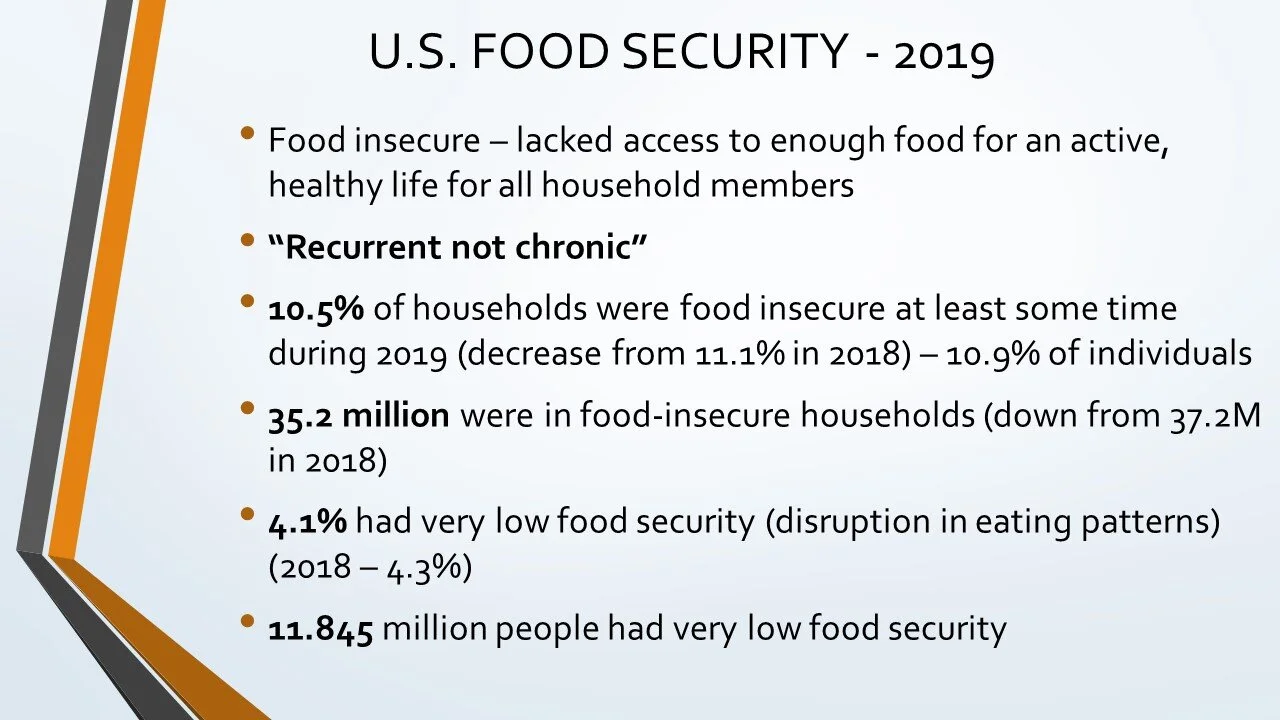
Read MoreKnowing the numbers for hunger and poverty can go a long way to helping us talk about the issues accurately and craft effective, forward-looking responses. For those who share with their congregation information about hunger and poverty, these numbers can also be helpful in putting together presentations or workshops.
Read MoreHere’s updates shared from submissions of the Lutheran Office for World Community and state public policy offices. As the new year begins, these state public policy offices (SPPO) share their annual policy priorities. Find a map and full list of ELCA affiliated SPPOs using our state office map. Learn more about Lutheran advocacy using our new resource, Advocacy 101 For Young Adults.
Read MoreAs the COVID-19 pandemic continues to cause uncertainty within the United States and across the globe, the Evangelical Lutheran Church in America (ELCA) has decided to cancel sending Young Adults in Global Mission (YAGM) volunteers for its 2021-22 program year.
Read More