
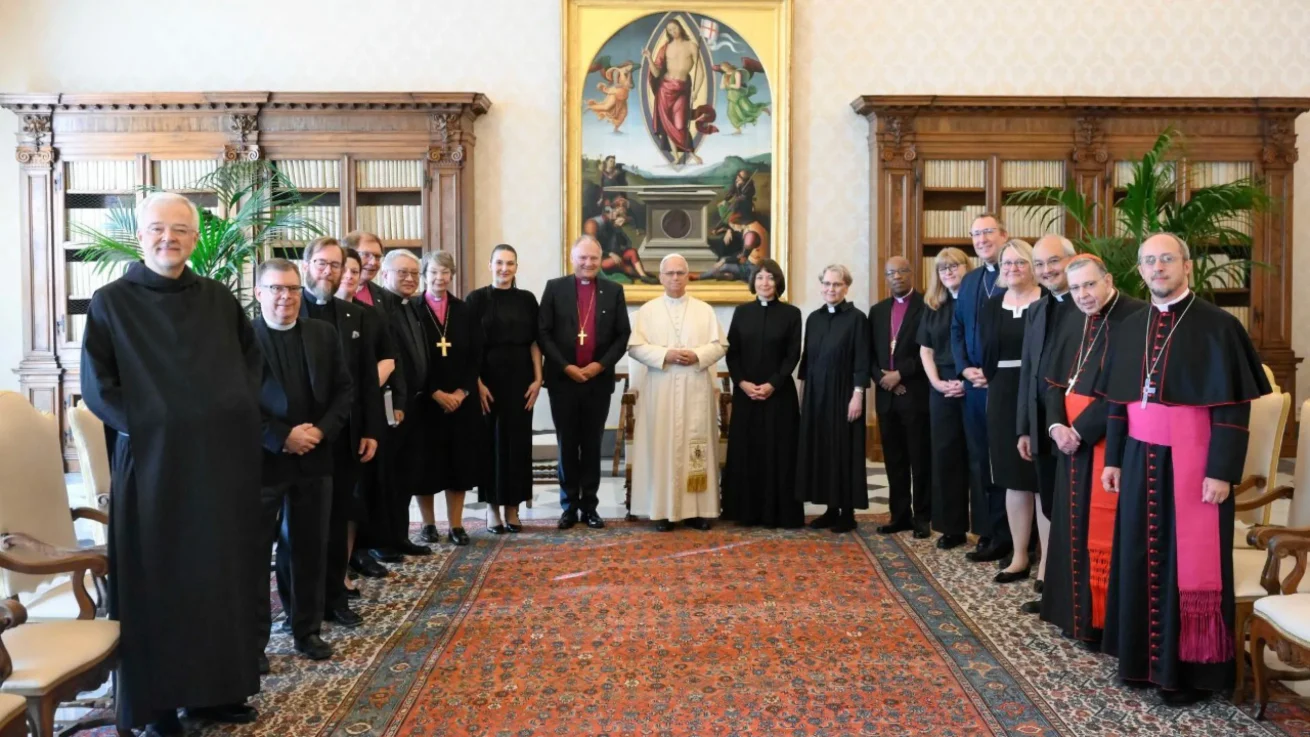
Lutheran World Federation leaders met with Pope Leo XIV on Oct. 1 to discuss Christian unity and hopes for a shared commemoration of the Augsburg Confession’s 500th anniversary in 2030. Their conversation highlighted the confession’s original call for dialogue and the continuing journey toward reconciliation, shared witness and communion. Read the story in Living Lutheran.
Read MoreHow can we lead faithfully through disagreement? Augustana University President Stephanie Herseth Sandlin shares how a campus conflict became an opportunity for apology, listening and renewed relationships. Grounded in Lutheran commitments to community and mutual flourishing, her reflection invites us to practice reconciliation in our congregations, families and workplaces. Read her reflection in Living Lutheran.

Read MoreGrace Lao and Hope Lutheran churches in El Sobrante, Calif., celebrated a new ministry partnership with multilingual Pentecost worship in May. Sharing space and resources while honoring each community’s identity, they are exploring how collaboration can strengthen ministry. Their emerging partnership offers Grand Canyon Synod leaders a glimpse of the Spirit’s work through patient listening, shared mission and worship across languages. Read their story in Living Lutheran.
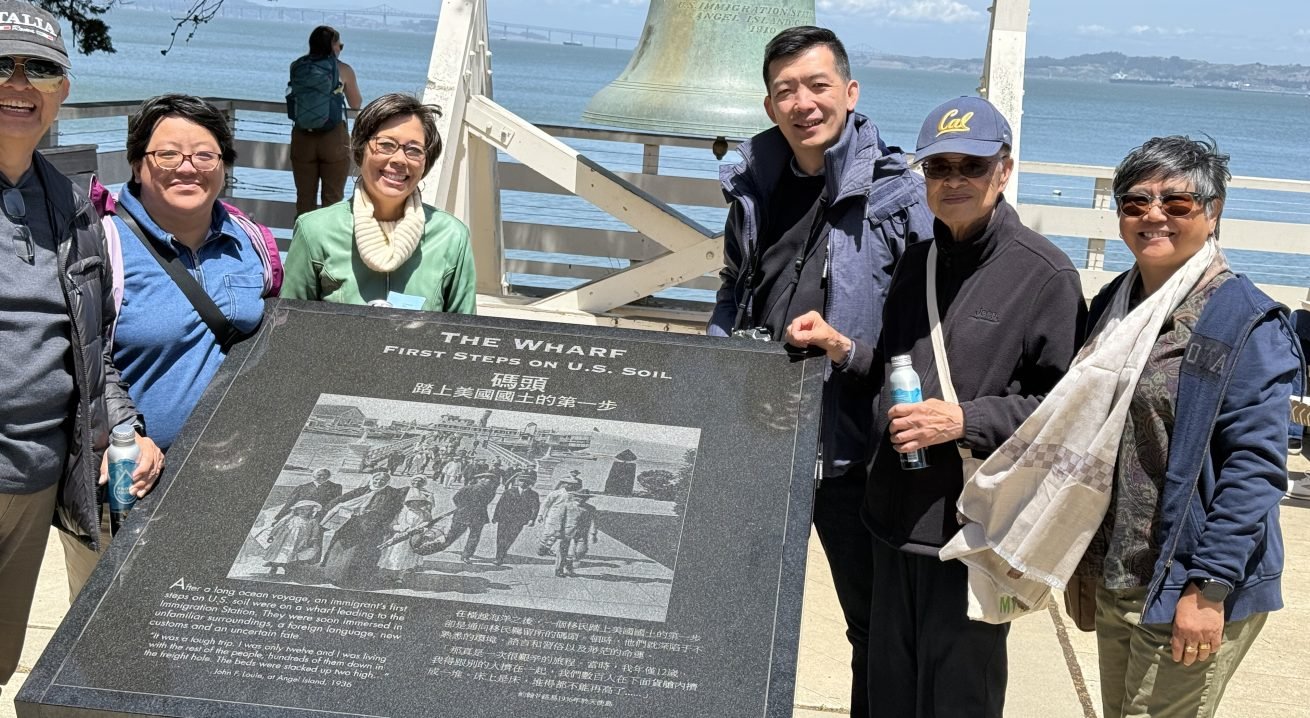
Read MoreThe ELCA’s Asian and Pacific Islander Ministries has developed a five-year vision for leadership, cultural belonging and justice that invites the whole church to participate. Grounded in listening sessions and our baptismal call, the plan calls for confronting anti-Asian racism, strengthening mentorship and reforming leadership pathways, with initial reforms expected by September 2027. Read the full story in Living Lutheran.
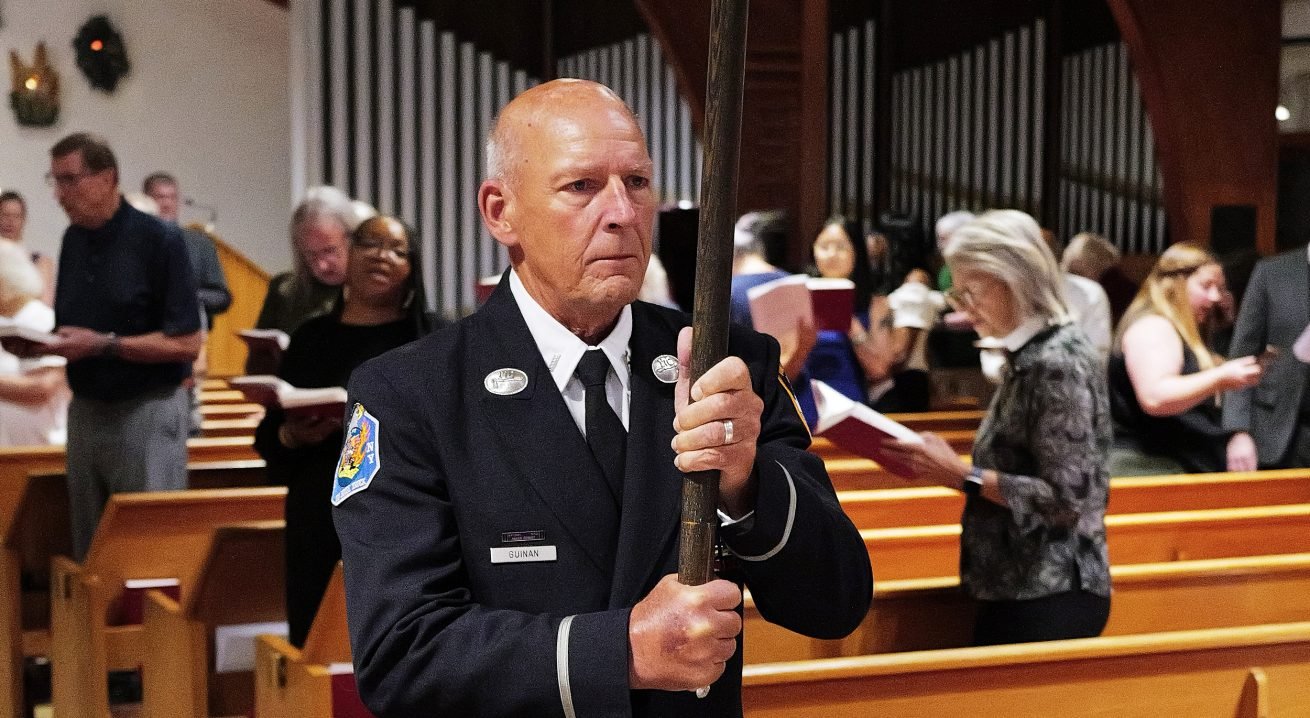
Read MoreOn the 25th anniversary of 9/11, 75 people gathered at Good Shepherd Lutheran Church in Plainview, N.Y., to remember those lost, honor first responders, share stories, and worship the wounded Savior. The service named both enduring grief—including losses from 9/11-related illness—and the hope found when communities care for one another.
This Living Lutheran story reflects on remembrance as a call to healing, kindness, and renewed community. Read the original Living Lutheran story.
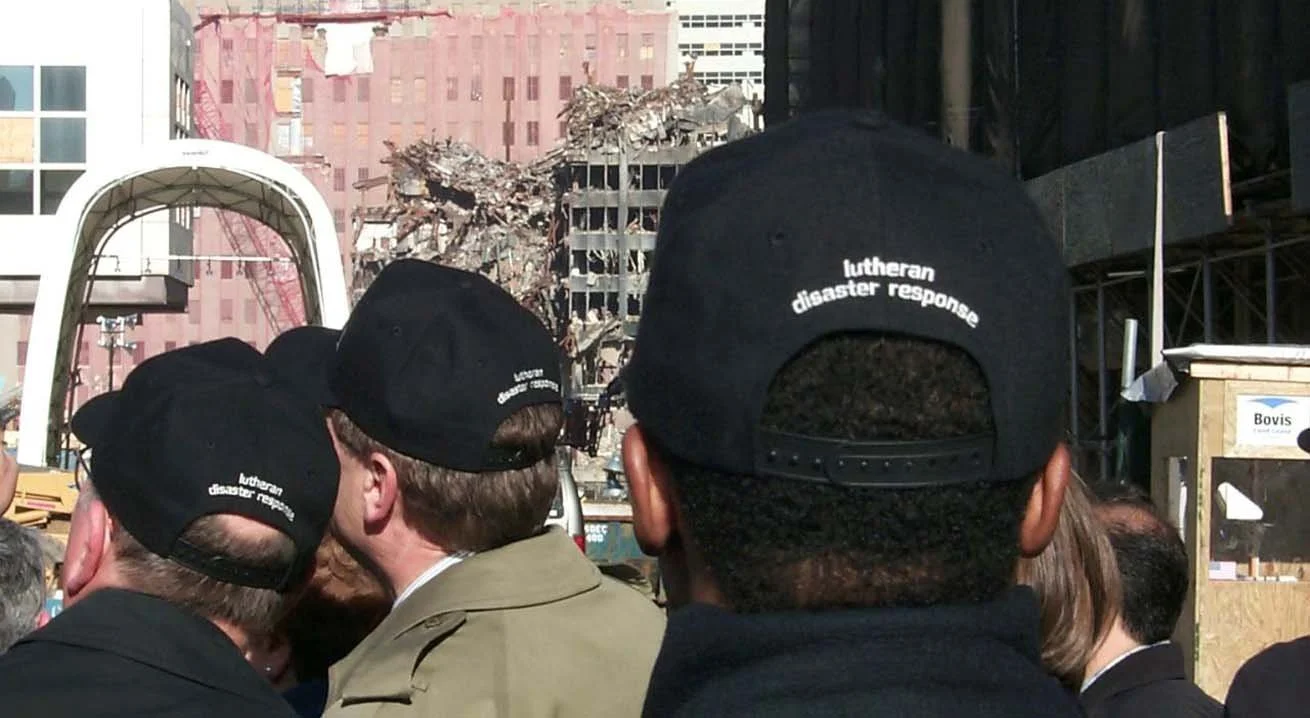
Read MoreOn the 25th anniversary of 9/11, retired Lutheran Disaster Response director Gilbert B. Furst remembers the church’s sustained response: counseling, care, advocacy, financial support, and accompaniment for communities in New York, New Jersey, and Washington, D.C.
His reflection testifies that God was present amid devastation—in the hands of firefighters, chaplains, counselors, neighbors, and all who served in Christ’s name. Read the original Living Lutheran reflection.
Read MoreThe Season of Creation, observed September 1 through October 4, invites congregations to give thanks for water and examine the environmental justice questions surrounding it. The Rev. Nancy Wright connects baptism, Jesus’ promise of living water and the watersheds that sustain every community.
Explore ideas for water-centered worship, education and action—especially relevant to the desert, rural and tribal communities of the Grand Canyon Synod. Read the full article at Living Lutheran.
Read MoreFamilies affected by disability often carry unseen burdens and may quietly leave congregational life when they must advocate for inclusion alone. Reflecting on the friends who carried a paralyzed man to Jesus in Mark 2, Chris G. Neeley challenges churches to become friends willing to share the load.
Discover how practical support, caregiver respite and a Lutheran understanding of grace can help build communities where every person belongs. Read the full reflection at Living Lutheran.
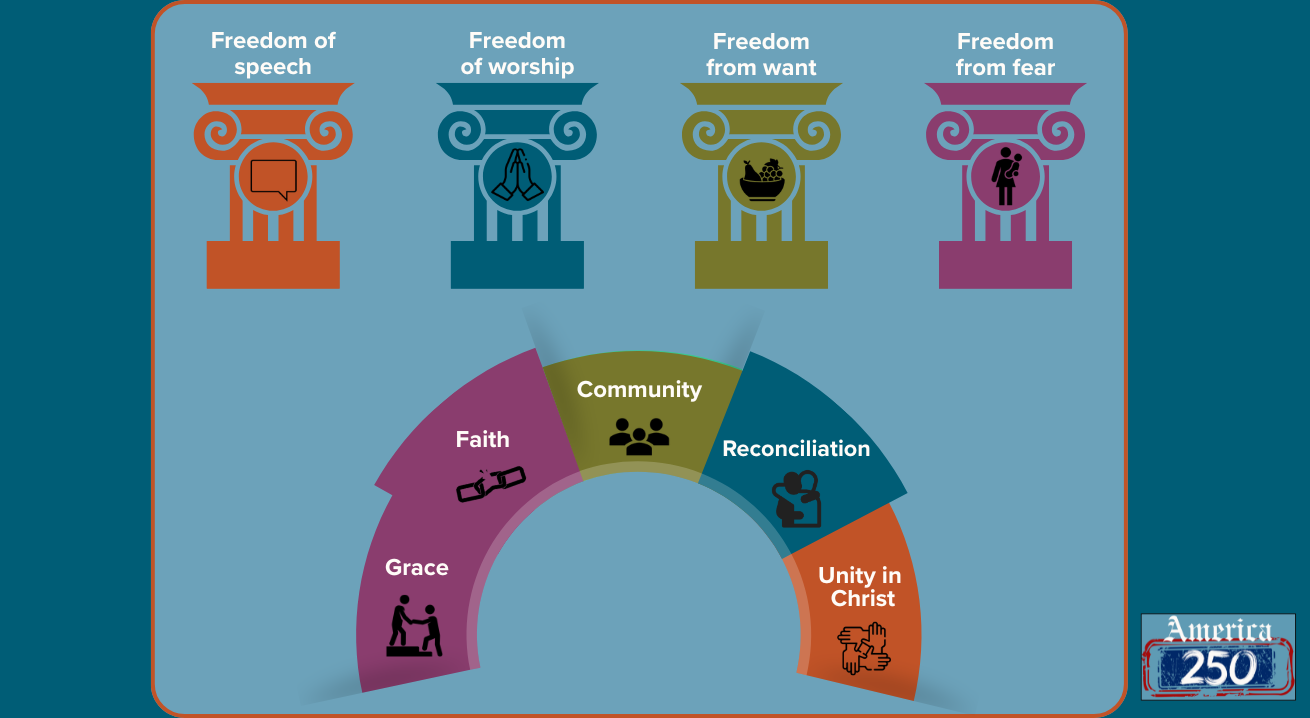
Read MoreAs the United States marks its 250th anniversary, Living Lutheran explores President Franklin D. Roosevelt’s “Four Freedoms”—freedom of speech and worship, and freedom from want and fear—through a distinctly Lutheran lens.
Leah Taber connects these enduring ideals with unity in Christ, reconciliation, community, grace and faith, asking what it would mean for Lutherans to embody these commitments in our congregations, communities and civic life. Read the full reflection in Living Lutheran.
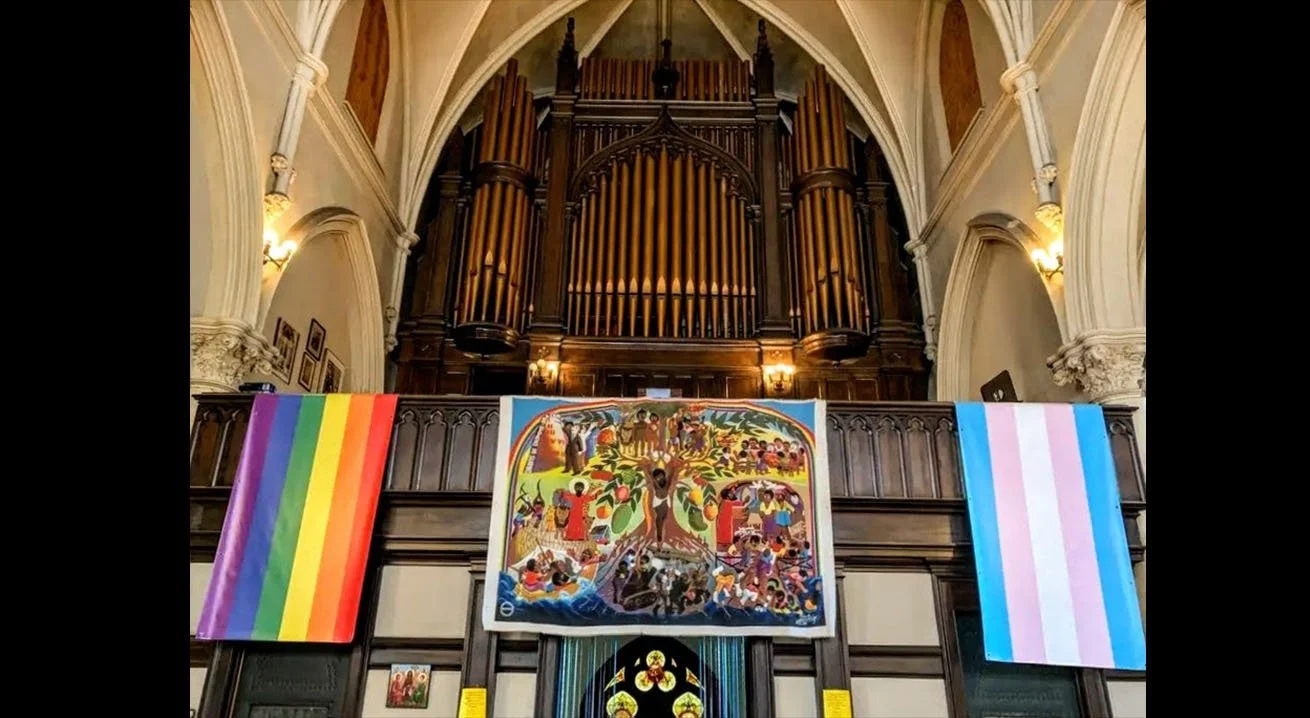
Read MoreWith declining membership and limited finances, Trinity Lutheran Church of Manhattan didn’t have abundant resources—but it did have space and a willingness to take a leap of faith. Twenty years ago, the congregation began sheltering LGBTQIA+ young adults experiencing homelessness. Today, Trinity Place remains open every night, offering shelter, community and a path toward greater stability.
In Living Lutheran, the story becomes an invitation for congregations to consider how underused buildings and land might serve their neighbors. The article also introduces the ELCA Church Property Resource Hub, which helps congregations explore faithful and creative possibilities for their property. Read “From Scarcity to Sanctuary” in Living Lutheran.
Read MoreWhat do Lutheran pastors, community organizing and the Pennsylvania Lottery have in common? In Living Lutheran, retired ELCA pastor P. Richard Grove recalls how Lutheran leaders helped organize older adults around affordable public transportation in the early 1970s—and how that advocacy contributed to a system that has since provided billions of dollars in benefits for Pennsylvania’s older adults.
Part of Living Lutheran’s America 250 series, the firsthand account offers a fascinating glimpse into Lutheran engagement in civic life and the lasting consequences of community organizing. Read “A Big Deal” in Living Lutheran.
Read MoreIn a recent Living Lutheran interview, author Thomas Maltman reflects on his new novel Ashes to Ashes, a story set within a rural Lutheran congregation where Ash Wednesday crosses mysteriously won’t wash away. Drawing on his own experience in congregational life, Maltman explores themes of mortality, belief, suffering, and grace—inviting readers to consider how faith shapes the way we live with one another in uncertain times.
Blending Lutheran practice, storytelling, and spiritual questions, Maltman describes his work as a “marvelous mystery” rooted in Lent’s call to reflection and renewal. Read more to explore how this uniquely Lutheran narrative invites deeper engagement with faith, doubt, and the enduring marks we carry.
Read MoreThe ELCA has adopted a groundbreaking social message on “Child Protection,” offering both theological grounding and practical guidance for congregations responding to abuse and neglect. The message emphasizes that protecting children is central to the church’s calling—rooted in Jesus’ care for the vulnerable—and establishes clear expectations, including mandatory reporting of suspected abuse by all church leaders, regardless of state law.
Alongside its theological framework, the message provides concrete policy recommendations, training resources, and tools to help congregations create safer environments. It marks a historic step for the church, equipping leaders to move from uncertainty to faithful action. Read more from Living Lutheran.
Read MoreThe “Making Room” Lenten series invites Christians to rethink the traditional focus on giving something up for Lent. For the week of March 8, the focus is making room for imperfection—releasing unrealistic expectations and remembering that God’s grace, not perfection, is what sustains us.
Grounded in 2 Corinthians 12:9, this week’s practice encourages journaling about one expectation you can release and reflecting on how God’s grace allows space for growth and compassion toward ourselves. Read the full reflection and explore the prayer and practice in the Living Lutheran article.
Read MoreLiving Lutheran begins a new Lenten series inviting readers to shift the focus of the season—not simply giving something up, but making room for what nourishes faith and life. The first week centers on rest, encouraging a simple daily practice: a 30-second “holy pause” to breathe deeply, clear the mind, and remember God’s sustaining grace.
Grounded in Psalm 121 and reflections on grace, this practice invites us to notice where rest already exists in our lives and where we might create more space for it during Lent. Explore the Lenten practice and reflection at Living Lutheran.
Read MoreIn a reflective essay for Living Lutheran, retired ELCA pastor Kristin D. Anderson revisits Martin Luther’s understanding of the devil and explores how evil can appear in everyday behaviors—accusing, gossiping, vengeance-seeking and more. Through Scripture, pastoral experience, and a Lenten lens of self-examination, Anderson reminds readers that while the devil seeks to corrupt and divide, Christ’s victory on the cross frees us to respond with forgiveness and love.
This thoughtful Lenten reflection invites readers to examine their own responses to harm and temptation and to rediscover the grace that leads us away from revenge and toward reconciliation. Read the full reflection at Living Lutheran.
Read MoreIn the February 2026 “Deeper Understandings” series, theologian Wanda Deifelt reflects on what it means to bear faithful witness in a time of social fracture, immigration enforcement actions, and public fear. Rooted in Luke 10 and Martin Luther’s teaching on Christian freedom, she reminds us that the neighbor is anyone in need—and that we are freed by the gospel not for self-protection, but for service.
Highlighting the Minnesota bishops’ statement and examples of solidarity from congregations like Our Saviour Lutheran Church in Minneapolis, the article calls Lutherans to build “webs of solidarity” and show up for vulnerable neighbors with dignity, courage, and hope. Read the full article from Living Lutheran.
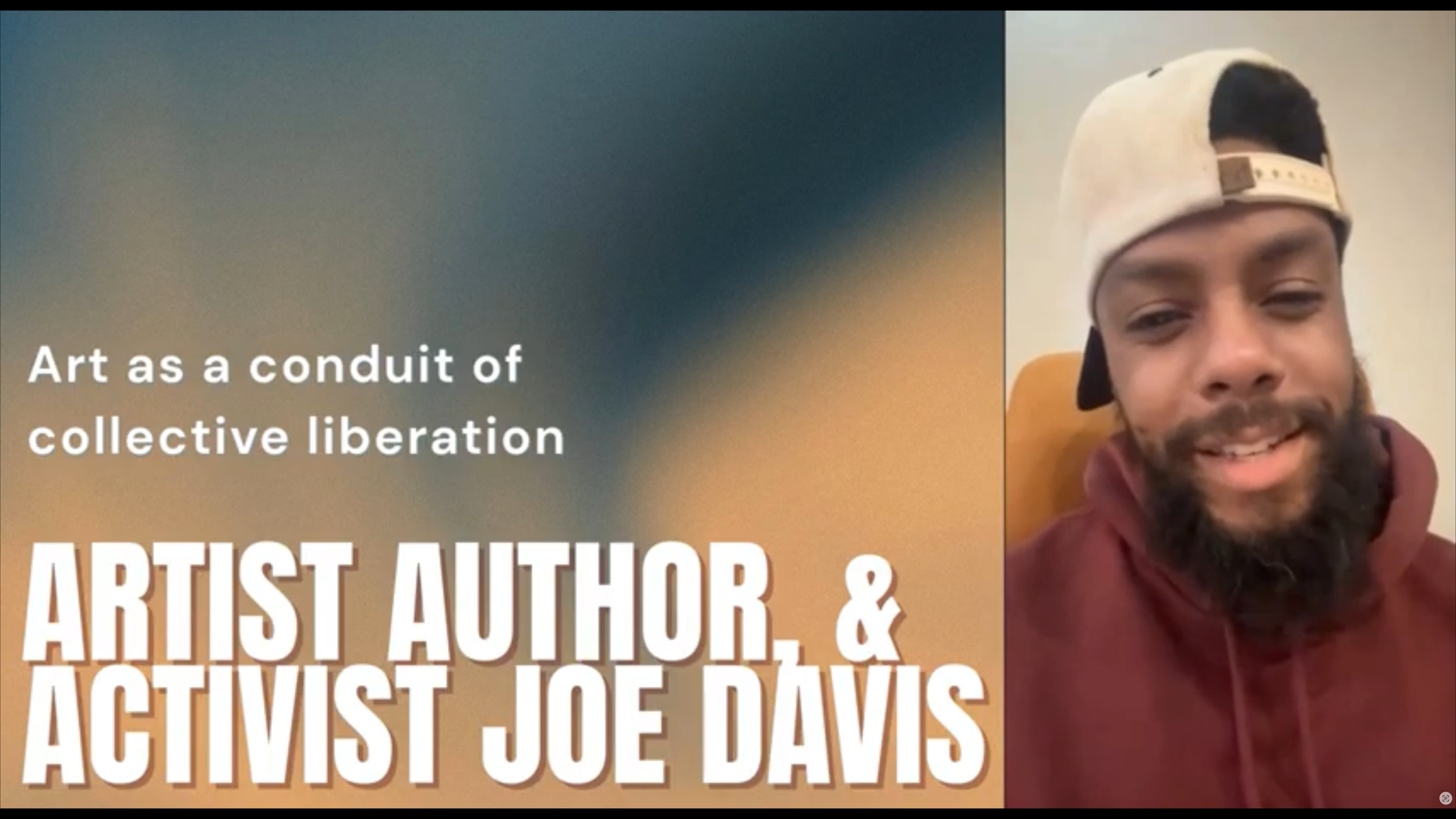
Read MoreLiving Lutheran spoke with Joe Davis about the ways art can inspire communities and motivate action toward the liberation and well-being of others. This video is Part 2 of that conversation; to view Part 1, click here.
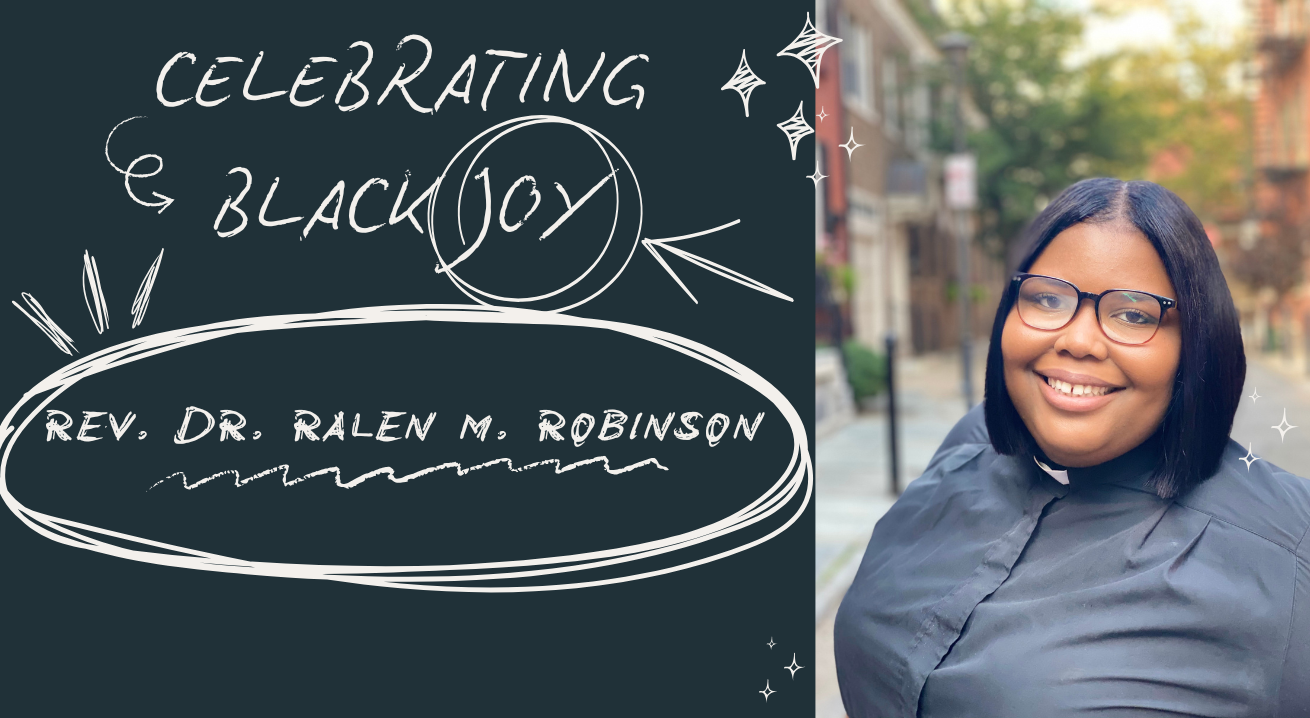
Read MoreAs we observe Black History Month, we invite you to read “The Timbre of Black Joy” by the Rev. Ralen M. Robinson, pastor of Reformation Lutheran Church in Wichita, Kan. In this powerful Voices of Faith reflection, Robinson names Black joy as sacred, transformative, and healing—“a balm of Gilead” that refuses to let pain have the final word.
In a world marked by struggle and injustice, Black joy is not denial but defiance—an embodied, communal witness to hope, resilience, and God’s sustaining love. We encourage you to read and reflect on this timely essay and consider how joy strengthens, protects, and renews our shared life in Christ.
Read MoreArtist activist and author Joe Davis sat down with Living Lutheran to share how the work he does as an artist shows up in healing spaces. Watch for part two of “Art as a conduit of collective liberation,” coming Feb. 23 on LivingLutheran.org.
Read More