Faith Lens: Who Do We Say God Is?
Faith Lens is a weekly Bible study that engages youth and young adults in connecting world events with the Bible, faith, and everyday life.
Prepare
Today marks the second Sunday after Epiphany when we again consider the baptism of Jesus and the different symbols used to describe him, as well as others. The Gospel of John begins proclaiming the good news of Christ in a way that is quite confusing at first glance, abruptly dropping us into John’s story. We read who John is not and who Jesus is said to be. Alongside this Gospel reading, in Psalm 40, we read a thanksgiving for all the ways God shows up for the psalmist in the midst of despair and fear.
Both passages present different symbols and names used for God, inviting us to wonder about them and the symbols we use today. How are those symbols helpful? How do they limit who we know or hope God is? Finally, we will write a poem by invoking the names and symbols that help us understand God. In that way, we too will declare the goodness of God in a world that is not a stranger to despair and fear.
Opening Exercise
Symbols: Take a look at the symbols below and try to guess what they mean.
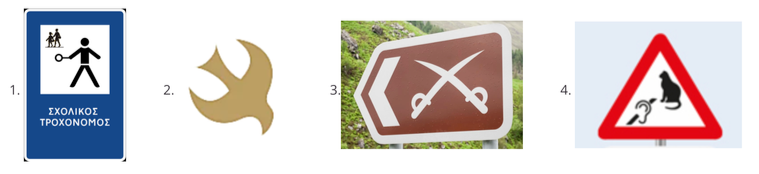
Symbols are a way to explain things without words. We use symbols as bumper stickers on our cars or water bottles to show what we’re for (or against). We have symbols decorating our sanctuaries and places of worship to tell the stories of our faith. Symbols can hold power to represent more than we can explain in words.
What are some symbols that have importance to you?
Why do they resonate with you?
Are there any symbols in your church that seem confusing?
What would make it less confusing?
Are symbols always helpful?
Why or why not?
Texts to Read Aloud
Who Do We Say God Is?
The church really likes her symbols, and she comes by it honest. Today we read how John attempts to explain who Jesus is to those who have yet to encounter him or his ministry, which has not yet come to be: “Lamb of God,” “Spirit like a dove,” “Rabbi,” and “Messiah.” Names and symbols can do the heavy lifting of topics or ideas that feel too big to explain. The way we talk about things matters and carries implications. All kinds of symbols surround us every day. We put symbols in the forms of stickers on our cars and cases. We put signs and flags in our yards as symbols of what we stand for, or who we represent. Symbols have the power to bring people together in solidarity, or to cause harm by declaring hate. In the church we use symbols to tell the story of who God is, and who we are in relationship to our Creator.
Another kind of symbol we encounter in the text is that of a name. We see it in the way John declares who Christ is, and we see it when Jesus renames Simon to Peter. Throughout scripture we read of God naming themself “I AM”. Others give a name to God by declaring who God is and how God has appeared to them. Then, in the Psalm for today, we read a poem of thanksgiving filled with imagery of an attempt to explain who God is.
These kinds of symbols and images continue to be important to the faithful today. How we talk about who God is matters. In a time that can feel like all scrolling is doom scrolling, what we put into words and art can be a prayer for the world. Anne Lamott is an author and activist who says that prayer can be put into one of three categories: Help, Thanks, and Wow. I wonder what it might look like to create a piece of art, a symbol, that tells one of these stories: a story of help or lament, a story of thanksgiving, and a story of praise. We will spend the rest of our time together talking and creating. Just as John pointed and said, “Look,” may our words and images point those around us again toward the Messiah in our midst.
Reflection Question:
Why do you think Jesus renamed Simon to Peter? What does each name translate to, and do you think that matters?
What names have you heard used for God, Jesus, or the Holy Spirit? Why do you think it matters what kind of language we use to describe God? What about art?
What symbols do you see Christians using in social spaces today?
Do you think that modern Christian symbols have cultural impact?
Closing Activity and Prayer:
For the closing prayer try out Anne Lamott’s “Help Thanks Wow” format. Do a popcorn-style prayer together leaving pause for each category. If you have time, you can also try writing a poem or drawing your own symbol for how you’ve experienced God this week or hope to in the week ahead.
Biography:
Ashley Hamel serves as the Director of Discipleship at St. Mark’s United Methodist Church, and runs the Young Professionals group, The Epworth League in Houston, Texas. She loves curating spaces of belonging where people can experience their belovedness. When not working you can find her taking her dogs on walks around the Bayou, scoping out antique shops, and taking photos of the beauty in the world around her.
Sign Answers:
Greek traffic sign for school crossing guard.
A Christian symbol of a dove, representing the Holy Spirit and/or peace.
In the UK, this is a historical marker.
In South Holland, this is a sign to warn motorists of the neighborhood cat who’s deaf.
